A steel shop is a fantastic building and a terrible insulator. Bare metal panels carry almost no R-value and conduct heat straight through, so a Cedar City shop bakes in the summer, freezes in the winter, and — the problem people don't expect — drips from the ceiling when the seasons turn. Spray foam is the go-to fix for all three, and for metal the right product is almost always closed-cell. This guide explains why, what the work involves, and what it costs. For the underlying product detail, see our closed-cell foam page and the open vs. closed comparison.
The real enemy is condensation, not just cold
Here's what makes metal different. When warm, moist indoor air — from a heater, a running engine, even your breath — touches cold steel, it condenses into water, exactly like a cold glass sweats on a summer day. In an uninsulated Cedar City shop, that means the underside of the roof literally rains on your tools, your truck, and your stored gear through the cold months. Fiberglass batts and reflective bubble wrap slow the heat but don't stop the humid air from reaching the steel, so they get wet, sag, and grow their own problems.
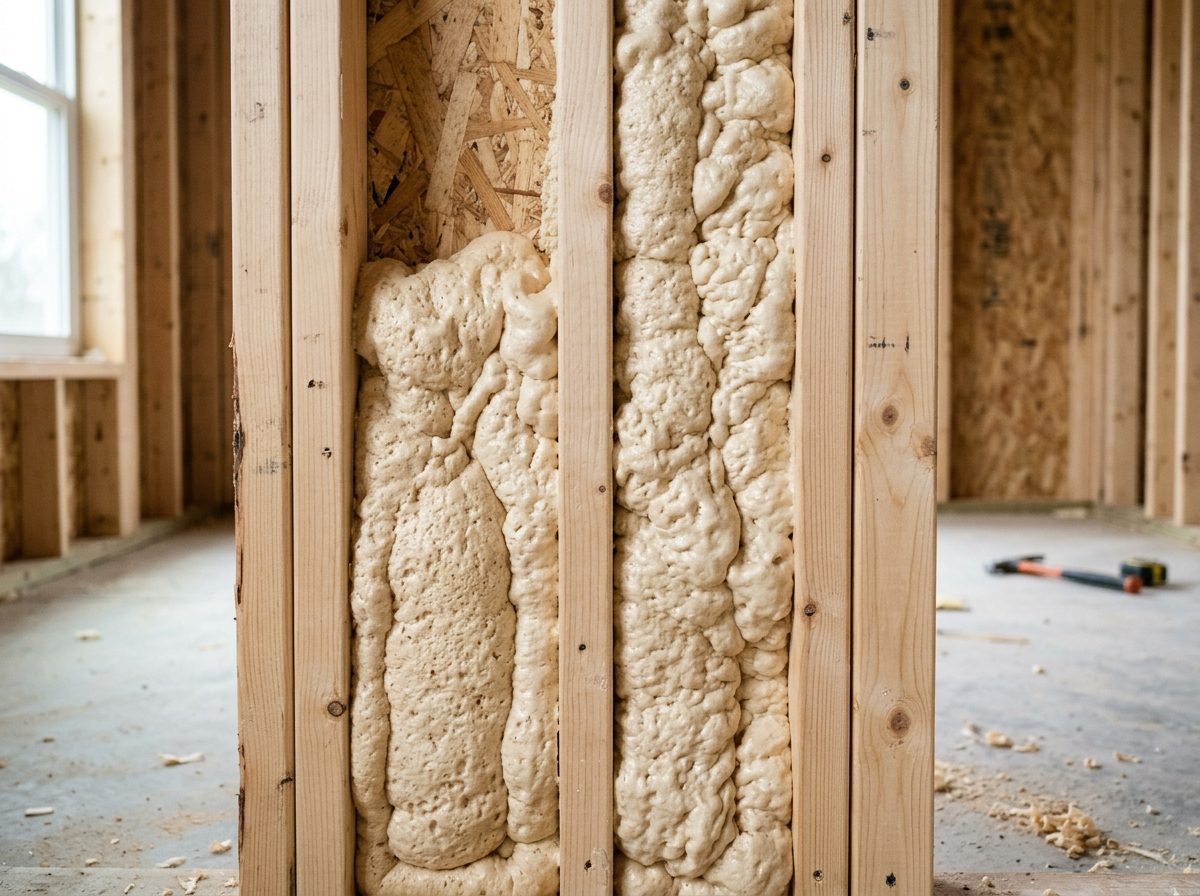
Closed-cell spray foam solves it at the source. Sprayed directly to the underside of the panels, it bonds to the steel and becomes its own air and vapor barrier, so moist interior air never reaches a cold surface to condense on. No condensing surface, no drip. That condensation control — not just the R-value — is the number-one reason metal buildings here get foamed.
Why closed-cell is the standard for steel
Open-cell foam has its place in a building, but a metal roof in a cold-dry climate usually isn't it — open-cell is vapor-permeable, so it can let moisture reach the steel. Closed-cell wins on metal for several reasons at once:
- It's a vapor and air barrier in one pass, which is the whole point on steel.
- It sprays to any shape — ribbed panels, purlins, girts, and seams — and seals every gap a batt would leave.
- It adds rigidity. Closed-cell bonds to the panels and stiffens the assembly, which also quiets the “oil-canning” boom of wind and rain on a steel roof.
- It packs R into little depth — roughly R-6 to R-7 per inch — so even a thin pass adds meaningful insulation where there's not much room.
- It resists water, so the occasional leak or wash-down doesn't wreck it.
How much foam? It depends on how you use the shop
Iron County is IECC Climate Zone 5B (cold-dry), and how much foam you need scales with how you use the building. A cold-storage barn just needs the sweating to stop; a heated woodshop or a conditioned office bay wants real R-value at the roof and walls. Rough guide:
| Goal | Typical closed-cell approach |
|---|---|
| Stop condensation only | ~1–2″ on the roof deck — seals the steel, adds ~R-7–13 |
| Comfortable, occasionally heated shop | ~2–3″ roof and walls |
| Fully heated / cooled space | Build toward code-level R (roof around R-19+, walls R-13+), often foam plus added insulation |
Conditioned metal buildings fall under commercial energy-code assembly targets; an installer sizes the foam to how you'll actually heat or cool the space. When in doubt, more foam on the roof is where the money works hardest here.
What a proper metal-building job includes
Spraying steel well is its own craft. A solid job runs like this:
- Clean, dry steel. Panels have to be free of oil, dust, and moisture or the foam won't bond — the most common cause of a bad metal spray is a dirty surface.
- Masking and protection. Windows, doors, electrical, and anything stored gets covered; overspray on steel is permanent.
- Roof first, then walls. The roof deck is the priority for condensation; walls follow to the specified thickness.
- Thermal or ignition barrier where required. If the shop is occupied, code calls for a thermal barrier over the foam or an approved intumescent coating — not an optional upsell, a safety and inspection requirement.
- Ventilation and combustion check. Sealing the building tight means any heater or gas appliance needs proper combustion air and venting confirmed.
What kinds of buildings this fits
The same approach covers most steel and post-frame structures around Cedar City and Iron County: home shops and garages, pole barns, ag and equipment buildings, warehouses, RV and boat storage, and hobby or “she-shed” conversions. If it's a steel or metal-skinned building you want to keep from sweating or make comfortable, closed-cell is usually the answer.
What metal-building foam costs
Closed-cell is priced by the board foot (one square foot at one inch), so cost tracks the area sprayed and the thickness. Rough installed ranges for planning:
| Scope | Typical installed range* |
|---|---|
| Closed-cell, per board foot | ~$1.00 – $1.75 |
| Roof only, ~1–2″ (condensation control) | ~$1.50 – $3.50 per sq ft of roof |
| Roof + walls, ~2–3″ | ~$3.00 – $6.00 per sq ft of surface |
| Whole 30x40 shop | Commonly several thousand dollars, thickness-dependent |
*Planning ranges only. Building height, panel profile, prep, thickness, and any required thermal/ignition barrier all move the price. The figure that applies to your building is a written, on-site quote after a look at the structure.
Because access and thickness vary so much between a low pole barn and a tall clear-span shop, metal buildings are a case where a walk-through really matters. The on-site estimate is free — you get a measured price, not a phone guess.
Metal building & shop questions, answered
Will spray foam stop my shop roof from dripping?
Yes — that's its headline job. Closed-cell sprayed to the underside of the panels removes the cold condensing surface and acts as a vapor barrier, so humid indoor air can't reach the steel and condense. Done right, the dripping stops.
Open-cell or closed-cell for a metal building?
Closed-cell, in almost every case. On a cold-climate steel roof, open-cell's vapor permeability can let moisture reach the panels. Closed-cell's water resistance and built-in vapor barrier are exactly what steel needs.
Can you foam a shop that's already built and in use?
Usually yes. The building gets cleared or masked around stored items, the steel is cleaned, and the crew sprays roof then walls. Occupied shops may need a thermal barrier or coating over the foam per code — that's confirmed at the estimate.
Does foam make a metal building quieter?
Noticeably. Bonding closed-cell to the panels dampens the drumming of rain, wind, and expansion “oil-canning,” on top of the temperature and condensation benefits.